Rotorcraft Engineering: A Reference Analysis of Design, Aerodynamics, and Operations
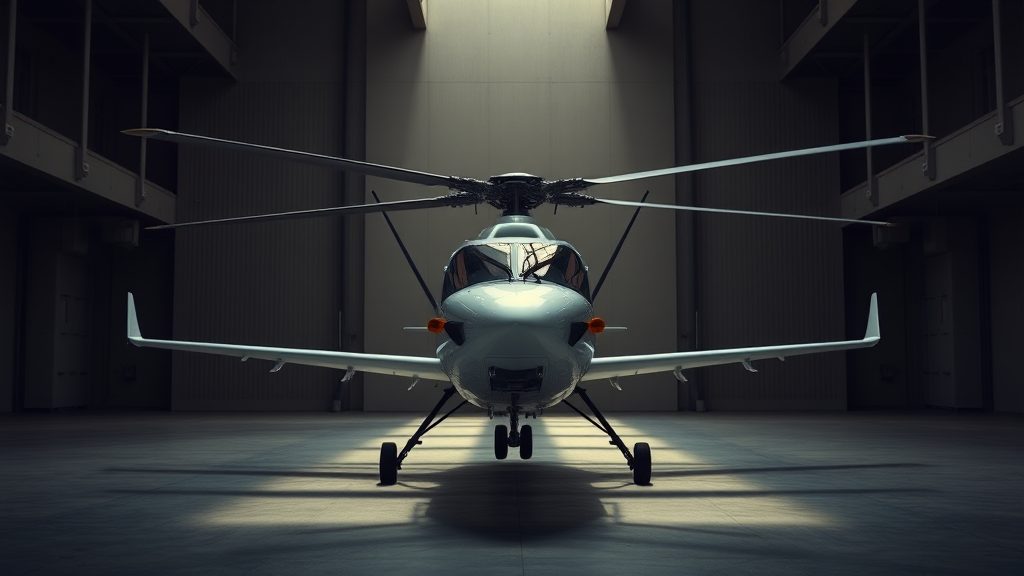
Categories of Rotorcraft Engineering
The rotorcraft engineering field encompasses a wide range of vertical-lift aircraft designed for diverse applications. The primary categories include helicopters and gyrocopters (also known as autogyros), each operating on distinct aerodynamic principles. Helicopters rely on a powered main rotor for lift and thrust, enabling VTOL capability. Gyrocopters feature an unpowered main rotor that autorotates freely due to forward motion through the air.
Within the helicopter category, sub-types span sport models optimized for agility, touring models offering comfort over short to medium distances, and utility and commercial helicopters built for heavy lifting in construction, oil and gas exploration, EMS, and search-and-rescue operations. The gyrocopter category divides into light recreational models and moderate models suited to longer flights in varied weather. This analysis of rotorcraft types shows how engineering decisions cascade from mission profile into structural and aerodynamic parameters.
Aerodynamic Analysis
Unlike fixed-wing aircraft, rotorcraft use rotating blades to create upward force sufficient for takeoff, hover, and three-dimensional maneuvering. Rotating blades cut through the air, producing low pressure above and high pressure below. Pitch control—adjusting blade angle relative to airflow—allows pilots to manage lift across varying conditions, while induced drag from blade-tip vortices represents a penalty less pronounced in continuous fixed-wing flight.
Modern rotorcraft designs incorporate advanced blade shapes and materials to minimize vortex creation and lower induced drag. The 2021 Ingenuity Mars Helicopter, documented by science.nasa.gov, demonstrated that these aerodynamic principles extend to extremely low-density atmospheres, completing 72 flights from its first flight on April 19, 2021, through January of a subsequent year. The decision to apply rotorcraft engineering beyond Earth validated lift-generation theory under conditions far removed from standard sea-level operations.
Safety Practices and Risk Management
Rotorcraft operations demand rigorous adherence to safety protocols. A thorough pre-flight inspection—covering engines, rotors, flight controls, avionics, and rotor blades for damage or wear—serves as the first line of defense against mechanical failure. During climb and descent, pilots must manage vortex ring state (VRS), or settling with power, by controlling vertical speed and employing proper entry and exit maneuvers.
According to the U.S. Helicopter Safety Team (USHST), rotorcraft rates per 100,000 flight hours constitute a key metric for assessing safety trends, with significant variation across specific industry sectors. The 2026 reference materials published under the Raven Rotor editorial framework highlight a consistent correlation between poorly maintained aircraft and increased accident occurrences, positioning maintenance quality as a critical operational variable in any risk-management decision.
Regulatory and Design Context
The Rotorcraft Design Approvals framework published at faa.gov establishes metrics including rotorcraft rates per 100,000 flight hours, accidents by specific industry sector, and fatal accident rate data. These standards inform both the engineering design process and the operational decision-making that follows type certification.
The choice between helicopter and gyrocopter involves evaluating intended use, budget, maintenance requirements, and personal preference. A single-rotor helicopter might be preferable for operations requiring precise maneuverability, whereas a twin-rotor design provides additional lift capacity and stability suited to heavy lifting. This comparison of single-rotor vs. twin-rotor configurations illustrates how structural decisions follow directly from mission requirements rather than from a single universal engineering template.
Checklist
- Verify rotor blade condition for signs of damage or wear during each pre-flight inspection
- Confirm engine operation, hydraulic system function, and fuel quantity before flight
- Review airspace considerations and licensing requirements per faa.gov or equivalent national body guidelines
- Assess vortex ring state risk within planned climb and descent profiles
- Execute pre-planned emergency scenarios regularly to maintain decision-making readiness under pressure
Operational Synthesis
Collectively, the engineering, aerodynamic, and safety dimensions of rotorcraft form an interdependent system. Lift generation, induced drag mitigation, and maintenance discipline must be evaluated together rather than in isolation. The 2026 reference framework presents a coherent model in which technical performance and regulatory compliance converge before an operational decision is finalized.
For the enthusiast and engineering reference community, rotorcraft technology continues to expand beyond terrestrial applications. The Ingenuity program, documented by science.nasa.gov, remains a notable case in which blade geometry, rotor speed control, and low-pressure lift generation were validated in an atmosphere with a fraction of Earth's density. The principles established in that 2021 mission feed directly into the design considerations that govern modern rotary-wing engineering on Earth.
Sources and Grounding Material
- mission: Rotorcraft and rotary-wing aviation: engineering, operations, and enthusiast reference.
- editorial_style: reference
- primary_topics: rotorcraft engineering; rotary-wing operations; aviation safety; enthusiast reference
- excluded_topics: law or legal services; politics; medical advice beyond general wellness; any Axis client or legal domain references
- Rotorcraft Engineering Analysis | raven-rotor.com Rotorcraft Engineering Analysis Rotorcraft Types and Their Applications The rotorcraft engineering field encompasses a wide range of vertical-lift aircraft designed to cater to diverse applications. Helicopters are the most common type, characterized by their main rotor providing lift and thrust for VTOL capabilities. They come in several categories: sport helicopters optimized for agility and maneuverability; touring helicopters offering comfort and utility over short distances; and utility and commercial helicopters built for heavy lifting tasks across various industries such as construction and EMS operations. Gyrocopters, on the other hand, operate differently with their main rotor autorotating freely due to forward motion. Light gyrocopters are ideal for recreational flying, providing an affordable entry point into rotorcraft piloting. Moderate gyrocopters offer enhanced performance capabilities suitable for longer flights and better handling in varied weather conditions. Understanding these distinct types allows potential buyers to make informed decisions based on their specific needs. Choosing the Right Rotorcraft The decision between a helicopter or a gyrocopter involves evaluating multiple factors including intended use, budget constraints, maintenance requirements, and personal preferences. Helicopters generally offer more capabilities but come with higher purchase and operational costs compared to gyrocopters. It is crucial for buyers to consider local regulations and airspace considerations when selecting the type of rotorcraft they wish to operate. Familiarizing oneself with federal aviation authority guidelines or equivalent national bodies helps in understanding licensing requirements and operational limitations. This preparation ensures compliance and facilitates a smoother acquisition process. Rotorcraft Safety Practices The operation of rotorcraft demands rigorous adherence to safety practices and risk management strategies. A thorough pre-flight inspection is the first line of defense against unexpected mechanical failures and operational errors. Pilots must meticulously check engines, rotors, flight controls, avionics systems, and rotor blades for any signs of damage or wear. During climb and descent phases, pilots must understand conditions such as vortex ring state (VRS) and employ effective techniques to avoid them by managing speed and altitude changes. Continuous monitoring of flight instruments and weather conditions is essential throughout the flight. Pilots should remain vigilant for any signs of malfunction or deviation from planned routes and altitudes. Knowing emergency procedures is crucial in rotorcraft operations. Regular execution of pre-planned emergency scenarios empowers pilots with the confidence to make quick decisions under pressure, ensuring a safe outcome in crisis situations. Rotorcraft Aerodynamics Overview The unique aerodynamic principles applied in rotorcraft engineering enable these aircraft to achieve vertical lift and sustained forward motion. Unlike fixed-wing aircraft that generate lift through air movement over their wings, rotorcraft use rotating blades to create a powerful upward force sufficient for takeoff, hovering, and maneuvering. Lift generation is a key aerodynamic principle behind rotorcraft functionality. Rotating
- Choosing a Rotorcraft: A Buyer's Overview — Raven Rotor Choosing a Rotorcraft: A Buyer's Overview Published 2026-08-17 Understanding Rotorcraft Types Rotorcraft encompasses a wide range of vertical-lift aircraft, each designed with unique capabilities suited to different environments and applications. The primary categories are helicopters and gyrocopters (also known as autogyros), both offering distinct advantages in terms of performance, safety, and utility. Helicopters The most common type of rotorcraft is the helicopter, characterized by its main rotor that provides lift and thrust, enabling vertical takeoff and landing (VTOL) capabilities. Helicopters come in various sizes and configurations: Sport helicopters: These are smaller aircraft designed for agility and maneuverability, often used for training or recreational flying. Touring helicopters: Larger than sport models but still relatively compact, touring helicopters offer more comfort and utility, suitable for sightseeing tours or passenger transport over short to medium distances. Utility and commercial helicopters: Built for heavy lifting, these robust machines serve industries such as construction, oil and gas exploration, emergency medical services (EMS), and search-and-rescue operations. Gyrocopters Gyrocopters operate on a different principle than helicopters. Their main rotor is not powered but autorotates freely in the wind due to the aircraft's forward motion, generating lift. Gyrocopters are known for their simplicity and lower cost compared to helicopters: Light gyrocopters: Ideal for recreational flying, these smaller models provide an affordable entry point into rotorcraft piloting. Moderate gyrocopters: Offering more performance capabilities than light models, moderate gyrocopters are suitable for longer flights and better handling in varied weather conditions. Evaluating Your Needs The choice between a helicopter or a gyrocopter hinges on several factors including your intended use, budget constraints, maintenance requirements, and personal preferences. Understanding these aspects will guide you towards selecting the rotorcraft that best meets your needs: Primary Use: Consider whether you require VTOL capabilities, heavy lifting capacity, or efficient forward flight. Budget: Helicopters generally come with higher purchase and maintenance costs compared to gyrocopters. Assess how much investment is feasible in the short term as well as long-term operational expenses. Maintenance: The complexity of a helicopter's design translates into more rigorous maintenance schedules, whereas gyrocopters have simpler mechanisms requiring less frequent service checks. In addition to these factors, it is crucial to factor in local regulations and airspace considerations when deciding on the type of rotorcraft you wish to operate. Familiarize yourself with federal aviation authority (FAA) guidelines or equivalent national bodies for licensing requirements and operational limitations. Getting Started To embark on your journey as a rotorcraft owner, begin by obtaining the necessary pilot licenses and ratings from certified flight schools specializing in rotorcraft instruction. Engage with experienced pilots through aviation forums or community events to gain insights into best practices and emerging trends
- Rotorcraft Safety Practices and Risk Management — Raven Rotor Rotorcraft Safety Practices and Risk Management Published 2026-08-17 Rotorcraft Safety Practices The operation of rotorcraft, including helicopters and gyrocopters, demands a high level of safety awareness and rigorous risk management practices. Pilots must adhere to strict protocols to mitigate hazards inherent in vertical-lift aviation. This article provides an overview of key safety practices that are crucial for pilots flying these versatile aircraft. Pre-Flight Inspection A thorough pre-flight inspection is the first line of defense against unexpected mechanical failures and operational errors. Pilots should meticulously check all critical components such as engines, rotors, flight controls, and avionics systems. Special attention must be given to rotor blades for any signs of damage or wear that could affect performance. Engine operation checks Rotor blade inspections Fuel quantity verification Hydraulic system tests The importance of conducting a comprehensive pre-flight cannot be overstated. It not only ensures the aircraft is airworthy but also helps in identifying potential issues before they become critical. Climb and Descent Techniques During climb and descent phases, rotorcraft are particularly susceptible to aerodynamic challenges such as vortex ring state (VRS) or settling with power. Pilots must understand the conditions that trigger these states and employ effective techniques to avoid them. Avoiding excessive vertical speeds Using proper entry and exit maneuvers for climb and descent The ability to manage speed and altitude changes effectively is vital in maintaining rotorcraft stability and preventing dangerous situations. In-Flight Monitoring Continuous monitoring of flight instruments, weather conditions, and aircraft systems is essential throughout the flight. Pilots should remain vigilant for any signs of malfunction or deviation from planned routes and altitudes. Quick identification and action on these issues can prevent minor problems from escalating into major incidents. Maintaining situational awareness Regularly updating weather information en route Emergency Procedures Knowing emergency procedures is as important as any other aspect of flying. Pilots must be well-prepared to handle emergencies such as engine failure, hydraulic system malfunctions, or sudden medical issues onboard. Prioritizing safety in all decision-making processes Executing pre-planned emergency scenarios regularly The training and practice of emergency procedures empower pilots with the confidence to make quick decisions under pressure, which is crucial for a safe outcome in crisis situations. Risk Management Strategies Risk management involves identifying hazards, assessing their potential impact, and implementing strategies to mitigate them. For rotorcraft operations, this includes: Conducting risk assessments before each flight Evaluating the need for additional safety measures in adverse weather conditions A proactive approach towards identifying risks and taking preventive actions can significantly reduce the likelihood of accidents.
- Rotorcraft Aerodynamics Explained — Raven Rotor Rotorcraft Aerodynamics Explained Published 2026-08-17 The Basics of Rotorcraft Aerodynamics Rotorcraft, including helicopters and gyrocopters, rely on unique aerodynamic principles to achieve vertical lift and sustained forward motion. Unlike fixed-wing aircraft that generate lift through the movement of air over their wings, rotorcraft use rotating blades to create a powerful upward force sufficient for takeoff, hovering, and maneuvering in three-dimensional space. Understanding Lift Generation The key aerodynamic principle behind rotorcraft is lift generation. Rotating blades cut through the air, creating an area of low pressure above them and high pressure below, which results in upward force known as lift. This process mimics the wing's function but operates dynamically due to the blade’s rotation. Blade Angle and Pitch Control A crucial aspect of rotorcraft aerodynamics is adjusting the angle at which each blade meets the airflow—this is called pitch control. By altering this angle, pilots can manage lift production across various flight conditions. Positive pitch increases the lifting force, while negative pitch decreases it. Factors Influencing Lift Several factors influence how effectively a rotorcraft generates lift: Air Density: Higher density air creates more lift for each blade rotation. This is why helicopters perform better in cold, dense air than in hot, thin conditions. Rotor Speed: Faster rotor speeds result in increased lift due to the higher number of blade rotations per second. Pitch Angle: The pitch angle directly correlates with how much force each blade applies against the airflow. Adjusting this angle can compensate for changes in air density and speed requirements. The Role of Induced Drag While lift generation is essential, it also introduces induced drag—a resistance caused by creating vortices (whirlpools of air) as the rotor blades rotate. This phenomenon is less pronounced in fixed-wing aircraft due to their continuous forward motion, but it significantly affects rotorcraft performance. Tips for Minimizing Induced Drag To optimize flight efficiency: Pilots often use cyclic control inputs to tilt the plane of rotation slightly forward or backward. This adjustment helps in reducing induced drag while maintaining effective lift generation. Modern rotorcraft designs incorporate advanced blade shapes and materials that minimize vortex creation, thereby lowering induced drag. Crafting a Stable Hover Maintaining stable hover is critical for rotorcraft operations. This involves balancing the upward force generated by rotating blades with the aircraft's weight. Pilots must constantly monitor altitude and adjust blade pitch to keep the craft stationary without drifting. Hovering Techniques Pilots use collective control, which changes the pitch of all rotor blades simultaneously, to manage lift production for hovering. Understanding wind direction and speed is crucial. Wind can push a helicopter sideways or backward, requiring adjustments in blade pitch and cyclic inputs. Navigating Forward Flight Moving forward
- Raven Rotor — Rotorcraft Technology and Flight Insights Rotorcraft Engineering Analysis The field of rotorcraft engineering encompasses a wide range of vertical-lift aircraft designed to cater to diverse applications. Helicopters are the most common type and come in several categories, each tailored for specific operational requirements. Among these categories, single-rotor helicopters offer versatility with their ability to maneuver in tight spaces, while twin-rotor designs provide additional lift capacity and stability, making them suitable for heavy lifting tasks. Choosing a Rotorcraft: A Buyer's Overview When deciding on the purchase of a rotorcraft, it is crucial to understand the various types available and their unique capabilities. For instance, helicopters are widely used in rescue operations due to their ability to hover and remain stationary above ground, while gyrocopters excel in cross-country travel thanks to their higher speed and efficiency. When comparing these two options, one must consider factors such as the mission requirements, operational environment, and maintenance costs. For example, a single-rotor helicopter might be preferable for operations requiring precise maneuverability, whereas a twin-rotor design would be more suitable for heavy lifting tasks due to its increased lift capacity. Rotorcraft Safety Practices and Risk Management The operation of rotorcraft demands rigorous safety practices and risk management protocols. Pilots must adhere to strict guidelines to mitigate hazards inherent in vertical-lift aviation, such as the risks associated with low-level flying or adverse weather conditions. According to the U.S. Helicopter Safety Team (USHST), rotorcraft rates per 100,000 flight hours are a key metric for assessing safety trends in the industry. The USHST notes that accidents by specific industry sectors have shown significant variation over time, with some sectors experiencing higher rates than others. Understanding these metrics is crucial when deciding on the type of rotorcraft to operate or purchase. For instance, choosing a helicopter designed with modern safety features might be more advantageous in environments prone to adverse weather conditions compared to older models lacking such advancements. Trends in Rotorcraft Operations A trend noted by the U.S. Helicopter Safety Team is the significant impact of maintenance quality on accident rates within the rotorcraft industry. Over the years, there has been a consistent correlation between poorly maintained aircraft and increased accident occurrences. This trend underscores the importance of rigorous maintenance schedules to ensure operational safety. Decision Guidance for Rotorcraft Selection To make an informed decision when selecting a rotorcraft, one must consider various factors such as mission requirements, operational environment, and budget constraints. For example, a pilot engaged in rescue missions might prioritize maneuverability over speed, leading them to choose a single-rotor helicopter. Steps for Implementing Rotorcraft Safety Practices Evaluate the specific safety guidelines provided by organizations like the USHST. Conduct regular maintenance checks in accordance Sources Ingenuity Mars Helicopter — science.nasa.gov — …Ingenuity Mars Helicopter NASA's Ingenuity Mars Helicopter completed 72 historic flights since first taking to the skies above the Red Planet Ingenuity Flight Record — science.nasa.gov — Type Helicopter First flight/last flight April 19, 2021/Jan Rotorcraft Design Approvals — faa.gov — The metrics include rotorcraft rates per 100,000 flight hours, accidents by specific industry sector, and the latest fatal accident rate data from the United States Helicopter Safety Team (USHST) Frequently Asked Questions What is Raven Rotor — Rotorcraft Technology and Flight Insights?